Small modular reactors are entering component fabrication under tight schedule pressure. Across every coolant technology, surface integrity is becoming a qualification gate — not an afterthought.
A new generation of small modular reactors (SMRs) and microreactors is moving from design into first-of-a-kind component fabrication. Whatever the coolant — pressurized water, molten salt, liquid sodium or high-temperature helium — the material-degradation risks are the same: corrosion, crud (corrosion-product) deposition, and the surface-initiated stress-corrosion cracking and fatigue that compromise long-lived, hard-to-inspect, hard-to-replace nuclear components. Electropolishing attacks all three at the surface, leaving a smooth, ultraclean, passive layer that performs measurably better in service.
The timing matters. North America led the global SMR market in 2025, and the U.S. Department of Energy has committed more than $3.4 billion through its Advanced Reactor Demonstration Program, alongside a Reactor Pilot Program targeting reactor criticality milestones in 2026.
Developers including GE Vernova Hitachi, NuScale, TerraPower, X-energy, Kairos Power and Westinghouse are building qualified-supplier programs now. For finishing specialists, that creates a narrow window: surface-finishing requirements on wetted and corrosion-critical parts are typically a late-stage qualification gate, and the suppliers who document repeatable results early are the ones who get designed in.
Why surface integrity is a nuclear design problem
Nuclear-grade components fail at the surface long before they fail in bulk. The challenges SMR developers must design out are well understood:
- Corrosion in aggressive coolants. Pressurized water at roughly 330 °C, molten salts near 700 °C, liquid sodium and high-temperature helium each attack alloys differently — and embedded free iron, scale and contamination accelerate every one of those mechanisms.
- Crud and source-term buildup. Corrosion products release, transport into the core, activate and redeposit, raising dose rates and fouling heat-transfer surfaces.
- Surface-initiated cracking. Machining and welding leave residual stress, microcracks, burrs and an oxide layer that seed stress-corrosion cracking (SCC) and fatigue.
- Cleanliness for nuclear-grade service. Embedded iron, grinding media and hydrocarbons compromise weldability, inspectability and corrosion performance.
- Inspection and weldability. Rough, contaminated surfaces obscure non-destructive examination and degrade weld quality.
How electropolishing addresses each challenge
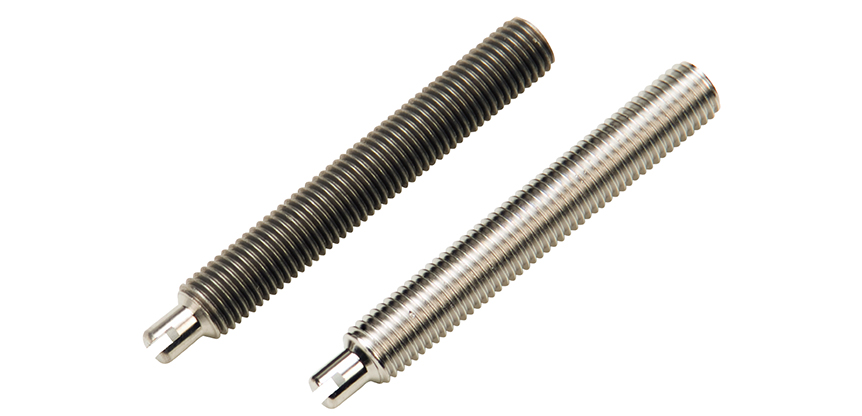
Electropolishing is an electrochemical process — often described as "reverse plating" — that removes a microscopically precise, uniform layer of surface metal. Because it works on the part's actual geometry rather than against it, it reaches recesses, threads and complex features that mechanical methods miss. Here is how electropolishing resolves the key challenges for SMR components:
- Corrosion → up to 30× the resistance of passivation. Removing embedded free iron and contaminants improves the chromium-to-iron ratio and leaves a passive surface. In ASTM B-117 salt-spray testing, electropolished coupons have shown up to 30 times the corrosion resistance of passivated parts.
- Crud → less deposition, easier cleaning. A smoother surface with lower real surface area gives corrosion products fewer nucleation and deposition sites and improves both cleanability and heat transfer.
- Cracking and fatigue → fewer initiation sites. Removing microcracks, burrs and residual machining stress raises fatigue life and reduces stress-corrosion cracking initiation — which can limit the life of springs and cyclically loaded parts.
- Cleanliness → an ultraclean surface. The process dissolves embedded scale, rust, grinding compounds, debris and oils, and the resulting finish does not peel or abrade.
- Weldability and inspection → improved. Removing the oxide layer and smoothing the surface improves weld quality and NDE clarity without affecting bulk hardness or introducing stresses.
- Compliance → documented and repeatable. A single electropolishing step can meet ASTM B912, ASTM A967, ASTM A380, ASTM F86, AMS 2700, ISO 15730 and ASME BPE — verified with in-house SEM, 3D profilometry and non-contact Ra reporting.
Matching the finish to the coolant
Different reactor technologies stress different components. Here are representative, high-value examples of how electropolishing solutions apply to each.
- Water-cooled PWR / BWR designs. Helical-coil and once-through steam-generator tubing and primary-loop piping in 304/316L and Alloy 690/600. Electropolishing the wetted inner diameter reduces corrosion-product release and crud, lowering source term and fouling.
- Molten salt reactors. Salt-wetted heat-exchanger surfaces and primary-loop components in Hastelloy N and 316L. A smooth, defect-free surface mitigates grain-boundary chromium-leaching initiation and eases inspection.
- Sodium fast reactors. Intermediate sodium-salt heat exchangers and sodium-pump internals. Electropolishing reduces wetting and deposition area and removes machining defects on flow surfaces.
- HTGR / gas-cooled designs. High-temperature helium heat-exchanger and recuperator surfaces, and microreactor heat pipes. Smoothing and cleaning improve heat transfer and reduce oxidation and fouling sites.
The alloys SMRs actually use
The materials SMR developers rely on are exactly the corrosion-resistant and high-temperature alloys electropolishing was refined to finish. Able Electropolishing processes the full nuclear-relevant range, including all stainless steels, nickel alloys and Inconel, Hastelloy, Haynes 214 and 230, titanium, and the refractory metals — niobium, tantalum, molybdenum, tungsten and TZM. Material removal is controlled as closely as ±.0002" depending on the alloy, and large-capacity tanks accept stainless parts up to 108" in length.
Qualify a finishing partner before first-of-a-kind fabrication
Able Electropolishing Co., Inc. brings more than 70 years of electropolishing experience as the world's largest electropolishing specialist, from a 50,000-square-foot Chicago facility running three shifts. The relevant credentials for a nuclear vendor-qualification file:
- ISO 9001:2015, ISO 13485:2016 and AS9100:2016 certified; ITAR registered; validated per GHTF/SG3.
- Compliance with ASTM B912, ASTM F86, ISO 15730, ASTM A380, ASTM A967, AMS 2700 and ASME BPE.
- Documented before/after results from in-house metrology — a JCM-7000 scanning electron microscope, KEYENCE 3D profiler and digital microscope — with verification down to the nanometer.
- Standard lead time of 5 business days, with two-day and next-day service available.
The most direct way to evaluate the process is to see it on your own part. Able will electropolish a representative coupon or component at no charge — and pay the shipping — returning side-by-side SEM and Ra documentation you can put straight into a supplier-qualification package. That is also the right way to confirm the alloy- and environment-specific benefit for your design.
Learn more about electropolishing for small modular reactor components